PPL1O COURSE OUTLINE
Course Title: Healthy Active Living Education, Grade 9
Grade: 9
Ministry Course Code: PPL1O
Course Type: Open
Credit Value: 0.5
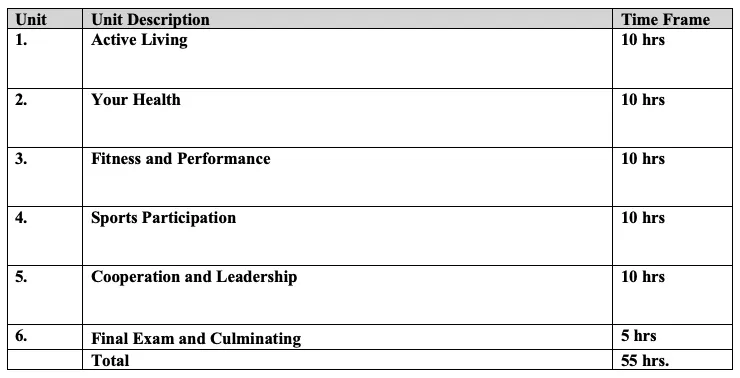
Course Hours: 55
Department: Health and Physical Education
Revision Date: N/A
Policy Document:
The Ontario Curriculum Grades 9 to 12 Health and Physical Education
https://www.edu.gov.on.ca/eng/curriculum/secondary/health9to12.pdf
Prerequisite: None
Domestic Student Price: $550
International Student Price: $799
COURSE DESCRIPTION
This course equips students with the knowledge and skills they need to make healthy choices now and lead healthy, active lives in the future. Through participation in a wide range of physical activities, students develop knowledge and skills related to movement competence and personal fitness that provide a foundation for active living. Students also acquire an understanding of the factors and skills that contribute to healthy development and learn how their own well-being is affected by, and affects, the world around them. Students build their sense of self, learn to interact positively with others, and develop their ability to think critically and creatively.
OVERALL EXPECTATIONS
Active living
By the end of this course, students will:
A1. participate actively and regularly in a wide variety of physical activities, and demonstrate an understanding of factors that can influence and support their participation in physical activity now and throughout their lives;
A2. demonstrate an understanding of the importance of being physically active, and apply physical fitness concepts and practices that contribute to healthy, active living;
A3. demonstrate responsibility for their own safety and the safety of others as they participate in physical activities.
Movement complete: Skills, Concepts, and Strategie
By the end of this course, students will:
B1. perform movement skills, demonstrating an understanding of the basic requirements of the skills and applying movement concepts as appropriate, as they engage in a variety of physical activities;
B2. apply movement strategies appropriately, demonstrating an understanding of the components of a variety of physical activities, in order to enhance their ability to participate successfully in those activities.
Healthy living
By the end of this course, students will:
C1. demonstrate an understanding of factors that contribute to healthy development;
C2. demonstrate the ability to apply health knowledge and living skills to make reasoned decisions and take appropriate actions relating to their personal health and well-being;
C3. demonstrate the ability to make connections that relate to health and well-being – how their choices and behaviors affect both themselves and others, and how factors in the world around them affect their own and others’ health and well-being.
OVERALL EXPECTATIONS
TEACHING AND LEARNING STRATEGIES
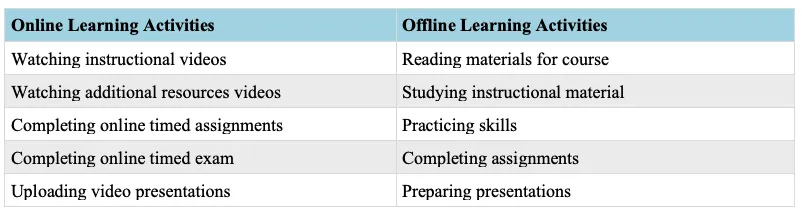
A variety of teaching and learning strategies are used to allow students many opportunities to attain the necessary skills for success in this course and in future studies. In all activities, consideration will be taken to ensure that individual students’ multiple intelligences and learning strengths are addressed through the use of varied and multiple activities in each lesson.
STRATEGIES FOR ASSESSMENT AND EVALUATION OF STUDENT PERFORMANCE
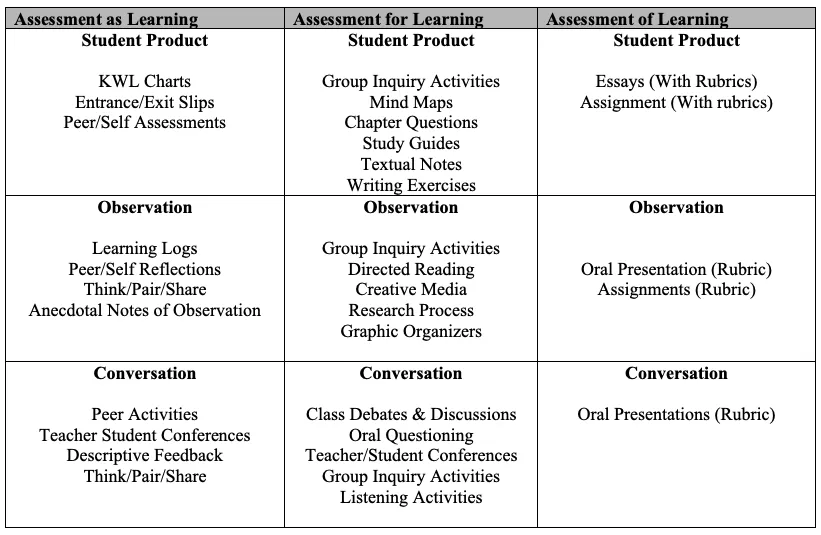
The primary purpose of assessment and evaluation is to improve student learning. Assessment and evaluation is based on the Ministry of Education’s Growing Success policy document, which articulates the Ministry’s vision for how assessment and evaluation is practiced in Ontario schools.
Growing Success describes the three assessment types as follows:
Assessment as Learning: focuses on the explicit fostering of students’ capacity over time to be their own best assessors, but teachers need to start by presenting and modelling external, structured opportunities for students to assess themselves.
Assessment for Learning: the process of seeking and interpreting evidence for use by learners and their teachers to decide where the learners are in their learning, where they need to go, and how best to get there.
Assessment of Learning: the assessment that becomes public and results in statements or symbols about how well students are learning.
ASSESSMENT AND EVALUATION
EVALUATION SCHEME
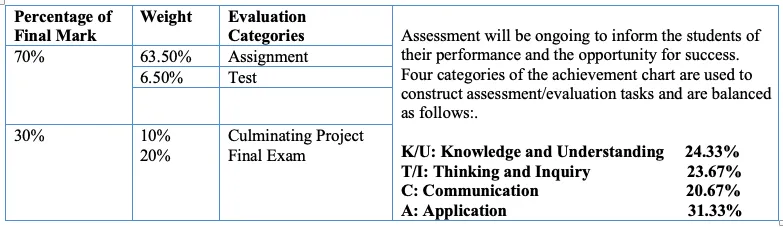
A final grade (percentage mark) is calculated at the end of the course and reflects the quality of the student’s achievement of the overall expectations of the course, in accordance with the provincial curriculum.
The final grade will be determined as follows:
Seventy percent (70%) of the grade will be based on evaluation conducted throughout the course. This portion of the grade should reflect the student’s most consistent level of achievement throughout the course, although special consideration should be given to more recent evidence of achievement.
Thirty percent (30%) of the grade will be based on a final evaluation administered at or towards the end of the course. This evaluation will be based on evidence from one or a combination of the following: an examination, a performance, an essay, and/or another method of evaluation suitable to the course content. The final evaluation allows the student an opportunity to demonstrate comprehensive achievement of the overall expectations for the course.
PLAGIARISM
Plagiarism is a serious offense. It is defined as taking words, phrasing, sentence structure, or any other element of the expression of another person’s ideas, and using them as if they were your own. Plagiarism is a violation of another person’s rights, whether the material taken is great or small.Students will be assisted in developing strategies and techniques to avoid plagiarism. They need to be aware that plagiarized term work will be penalized and could result in a mark of zero.
NEW!
SBI3U
SCH4U
ENG4U
ENG3U
SBI4U
MDM4U
MCR3U
BBB4M
BOH4M
MHF4U
We offer a hybrid model of education for all of our online courses, you can earn your OSSD with us!
How We Help Students

Complete Prerequisites
as you work toward your Ontario Secondary School Diploma
Earn
as you work toward your Ontario Secondary School Diploma
Retake
a course you had trouble with
Meet
a course you had trouble with
Take
a course not offered
In your home school
Trust
a course not offered
In your home school
Spark Asher Academy Alumni University Destinations